
This title is currently out of stock. Leave us your email address, we’d let you know when it’s in stock again!
-

A note on book covers: while we do our best to ensure the accuracy of cover images, ISBNs may at times be reused for different editions of the same title which may hence appear as a different cover.

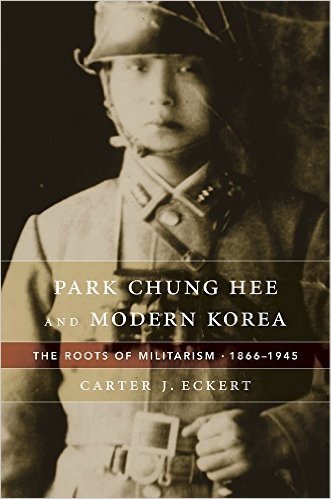
Park Chung Hee And Modern Korea: The Roots Of Militarism, 1866-1945
Park Chung Hee And Modern Korea: The Roots Of Militarism, 1866-1945
Couldn't load pickup availability
The first volume of a comprehensive two-part history, Park Chung Hee and Modern Korea: The Roots of Militarism, 1866–1945 reveals how the foundations of the dynamic but strongly authoritarian Korean state that emerged under Park were laid during the period of Japanese occupation. As a cadet in the Manchurian Military Academy, Park and his fellow officers absorbed the Imperial Japanese Army’s ethos of victory at all costs and absolute obedience to authority. Japanese military culture decisively shaped Korea’s postwar generation of military leaders. When Park seized power in an army coup in 1961, he brought this training and mentality to bear on the project of Korean modernization.
Korean society under Park exuded a distinctively martial character, Eckert shows. Its hallmarks included the belief that the army should intervene in politics in times of crisis; that a central authority should plan and monitor the country’s economic system; that the Korean people’s “can do” spirit would allow them to overcome any challenge; and that the state should maintain a strong disciplinary presence in society, reserving the right to use violence to maintain order.
Details of Book
A note on book covers: while we do our best to ensure the accuracy of cover images, ISBNs may at times be reused for different editions of the same title which may hence appear as a different cover.
-
One Line Summary
Historical roots of Korea's militarized modern state.
-
Who is this book for?
If you're intrigued by how history shapes a nation's character, this book offers a deep dive into Korea's militarized roots. It reveals how early 20th-century influences and military culture crafted a leadership style that still influences South Korea today. Perfect for history buffs and those interested in political development, this book makes complex historical forces approachable and compelling.