
This title is currently out of stock. Leave us your email address, we’d let you know when it’s in stock again!
-

A note on book covers: while we do our best to ensure the accuracy of cover images, ISBNs may at times be reused for different editions of the same title which may hence appear as a different cover.

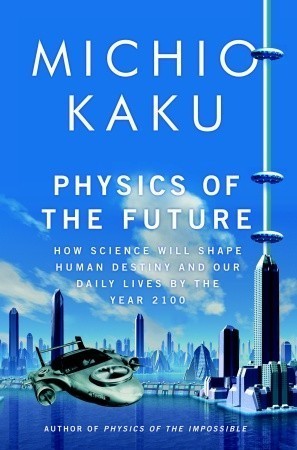
Physics Of The Future: How Science Will Shape Human Destiny And Our Daily Lives By The Year 2100
Physics Of The Future: How Science Will Shape Human Destiny And Our Daily Lives By The Year 2100
Couldn't load pickup availability
“Mind-bending…. [An] alternately fascinating and frightening book.” — San Francisco Chronicle
Space elevators. Internet-enabled contact lenses. Cars that fly by floating on magnetic fields. This is the stuff of science fiction—it’s also daily life in the year 2100.
Renowned theoretical physicist Michio Kaku considers how these inventions will affect the world economy, addressing the key questions: Who will have jobs? Which nations will prosper? Kaku interviews three hundred of the world’s top scientists—working in their labs on astonishing prototypes. He also takes into account the rigorous scientific principles that regulate how quickly, how safely, and how far technologies can advance. In Physics of the Future, Kaku forecasts a century of earth-shaking advances in technology that could make even the last centuries’ leaps and bounds seem insignificant.
Details of Book
Related Collections:
A note on book covers: while we do our best to ensure the accuracy of cover images, ISBNs may at times be reused for different editions of the same title which may hence appear as a different cover.
-
One Line Summary
Future tech shaping human destiny by 2100.
-
Who is this book for?
If you're curious about how technology could transform our world, this book offers a fascinating glimpse into the future. Michio Kaku combines scientific insights with imaginative projections, making complex ideas accessible and exciting. It's a compelling read for anyone interested in the possibilities and challenges the next century might bring.