
This title is currently out of stock. Leave us your email address, we’d let you know when it’s in stock again!
-

A note on book covers: while we do our best to ensure the accuracy of cover images, ISBNs may at times be reused for different editions of the same title which may hence appear as a different cover.

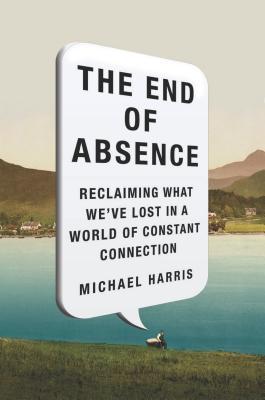
The End of Absence: Reclaiming What We've Lost in a World of Constant Connection
The End of Absence: Reclaiming What We've Lost in a World of Constant Connection
Couldn't load pickup availability
For future generations, it won't mean anything very obvious. They will be so immersed in online life that questions about the Internet's basic purpose or meaning will vanish.
But those of us who have lived both with and without the crowded connectivity of online life have a rare opportunity. We can still recognize the difference between Before and After. We catch ourselves idly reaching for our phones at the bus stop. Or we notice how, mid-conversation, a fumbling friend dives into the perfect recall of Google.
In this eloquent and thought-provoking book, Michael Harris argues that amid all the changes we're experiencing, the most interesting is the one that future generations will find hardest to grasp. That is the end of absence-the loss of lack. The daydreaming silences in our lives are filled; the burning solitudes are extinguished. There's no true "free time" when you carry a smartphone. Today's rarest commodity is the chance to be alone with your own thoughts.
Details of Book
Related Collections:
A note on book covers: while we do our best to ensure the accuracy of cover images, ISBNs may at times be reused for different editions of the same title which may hence appear as a different cover.
-
One Line Summary
Explores the cultural loss of solitude in digital age.
-
Who is this book for?
If you're curious about how our digital habits are reshaping our inner lives, this book offers a compelling and thoughtful look. Michael Harris invites you to reflect on what we gain and lose as silence and solitude disappear from everyday experiences. It's a meaningful read for anyone questioning the impact of constant connectivity on personal well-being.