
This title is currently out of stock. Leave us your email address, we’d let you know when it’s in stock again!
-

A note on book covers: while we do our best to ensure the accuracy of cover images, ISBNs may at times be reused for different editions of the same title which may hence appear as a different cover.

The Future Of Life
The Future Of Life
Couldn't load pickup availability
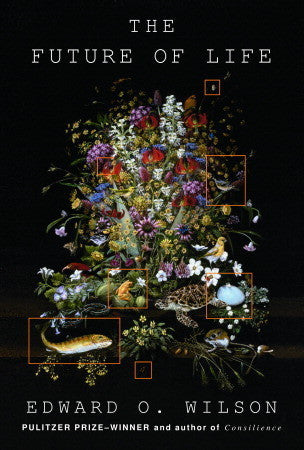
Today we understand that our world is infinitely richer than was ever previously guessed. Yet it is so ravaged by human activity that half its species could be gone by the end of the present century. These two contrasting truths—unexpected magnificence and underestimated peril—have become compellingly clear during the past two decades of research on biological diversity.
In this dazzlingly intelligent and ultimately hopeful book, Wilson describes what treasures of the natural world we are about to lose forever—in many cases animals, insects, and plants we have only just discovered, and whose potential to nourish us, protect us, and cure our illnesses is immeasurable—and what we can do to save them. In the process, he explores the ethical and religious bases of the conservation movement and deflates the myth that environmental policy is antithetical to economic growth by illustrating how new methods of conservation can ensure long-term economic well-being.
The Future of Life is a magisterial both a moving description of our biosphere and a guidebook for the protection of all its species, including humankind.
Details of Book
Related Collections:
A note on book covers: while we do our best to ensure the accuracy of cover images, ISBNs may at times be reused for different editions of the same title which may hence appear as a different cover.
-
One Line Summary
Urgent call to save Earth's remaining biodiversity.
-
Who is this book for?
If you're interested in understanding how human activity impacts the natural world and what steps can be taken to preserve it, this book offers a compelling and hopeful perspective. E.O. Wilson's insights are both scientific and ethical, making it a meaningful read for anyone concerned about the future of our planet and its intricate ecosystems.